


Are you ready to take your business to the next level with cutting-edge digital solutions? Look no further! At InnoSewa, we specialize in providing comprehensive digital services that streamline your IT operations, enhance your online presence, and drive growth.
Started in 2017, InnoSewa helps companies make the promise of digital transformation a reality. We work collaboratively with you to create a deep understanding of the risks and opportunities presented by new emerging technologies and think creatively about how you can use these technologies to improve business performance.
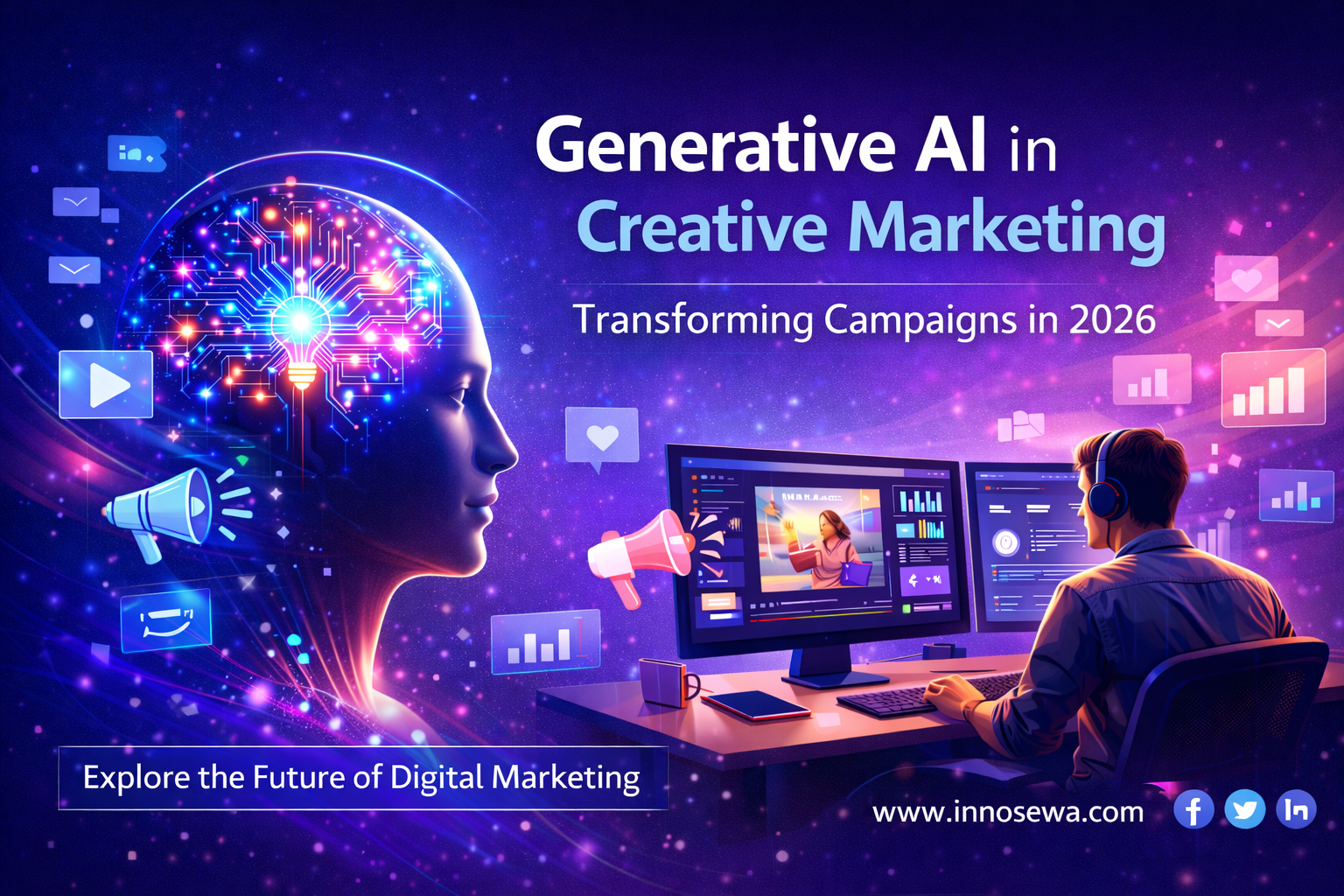
Generative AI in Marketing: How AI Is Transforming Creative Campaigns in 2026
The digital marketing landscape is evolving faster than ever, and one of the most disruptive forces driving this change is Generative Artificial Intelligence (AI). From automated content creation to personalized customer experiences, generative AI tools are redefining how brands design, execute, and optimize creative marketing campaigns.
For businesses looking to stay competitive in 2026 and beyond, adopting AI-powered marketing strategies is no longer optional—it is essential.
In this article, we explore how generative AI is transforming creative marketing and how companies can leverage it effectively.
What Is Generative AI in Marketing?
Generative AI refers to advanced machine learning models capable of creating original content such as:
- Written content (blogs, ads, emails, captions)
- Images and graphics
- Videos and animations
- Audio and voice content
Popular tools such as ChatGPT, Midjourney, Runway, and AI design platforms are enabling marketers to produce high-quality creative assets faster and more cost-effectively than traditional methods.
For digital agencies like InnoSewa, generative AI enhances digital marketing, branding, graphic design, and content strategies for clients across industries.
How Generative AI is Transforming Creative Marketing
The "Big Three" of generative tech—text, image, and video—have moved from simple experimentation to becoming essential members of the creative team.
- ChatGPT & Strategic Ideation: Beyond just writing catchy captions, models like ChatGPT are now used for rapid prototyping of creative briefs. Marketers use these tools to pressure-test campaign angles, build complex customer journey maps, and generate thousands of ad copy variations in seconds.
- Midjourney & Visual Storytelling: High-end photography and complex graphic design used to require massive budgets. With Midjourney, brands can create brand-aligned, high-fidelity visuals for mood boards or final ad creatives. This allows for "scroller-stopping" imagery that is specifically tailored to niche audience aesthetics without the need for a physical photoshoot.
- Runway & Video Innovation: Video remains the highest-engaging medium, and Runway has democratized its production. By converting text or images into high-quality video clips, brands are producing short-form cinematic content for social media at a fraction of the traditional cost and time.
Key Insight: The most successful 2026 campaigns aren't "AI-led"—they are AI-augmented. Human oversight remains the "soul" of the brand, ensuring that AI-generated assets maintain emotional resonance and brand consistency.
Real-Time Personalization: The End of Static Ads
The most significant shift in 2026 is the death of the "one-size-fits-all" advertisement. Through AI-driven real-time personalization, digital ads have become living entities.
- Dynamic Creative Optimization (DCO): Using machine learning, ads can now automatically adjust their headlines, background colors, and featured products based on the viewer’s browsing history, location, and even the current weather.
- Hyper-Personalized Content: Imagine an email or a social ad where the featured model’s outfit or the background setting changes to match your style preferences. AI agents now analyze first-party data to serve content that feels like a 1-on-1 conversation.
- Predictive Engagement: AI doesn't just react; it predicts. By analyzing intent signals, brands are deploying "context-aware" ads that appear exactly when a user is most likely to convert, leading to engagement boosts of over 30% compared to traditional methods.
The Future is Collaborative
As we look ahead, the goal isn't just to use AI for efficiency—it's to use it for elevation. By automating the mundane tasks of resizing assets and drafting basic copy, creative professionals are free to focus on high-level strategy and the "big idea." In 2026, the brands that win are those that treat AI as a "creative partner," blending machine speed with human empathy.